Garmin inReach Mini
By: Mike Ye x Ella (AI)
July 22, 2026
Field-validated satellite communicator for check-ins and interactive SOS, with a pre-trip activation, testing, battery, and contact protocol.
Field-validated satellite communicator for check-ins and interactive SOS, with a pre-trip activation, testing, battery, and contact protocol.
Evidence state: Field validated
Control layer: Safety and communication
Field range: Remote routes including Whitney, Langley, Charleston, Baldy, and San Gorgonio.
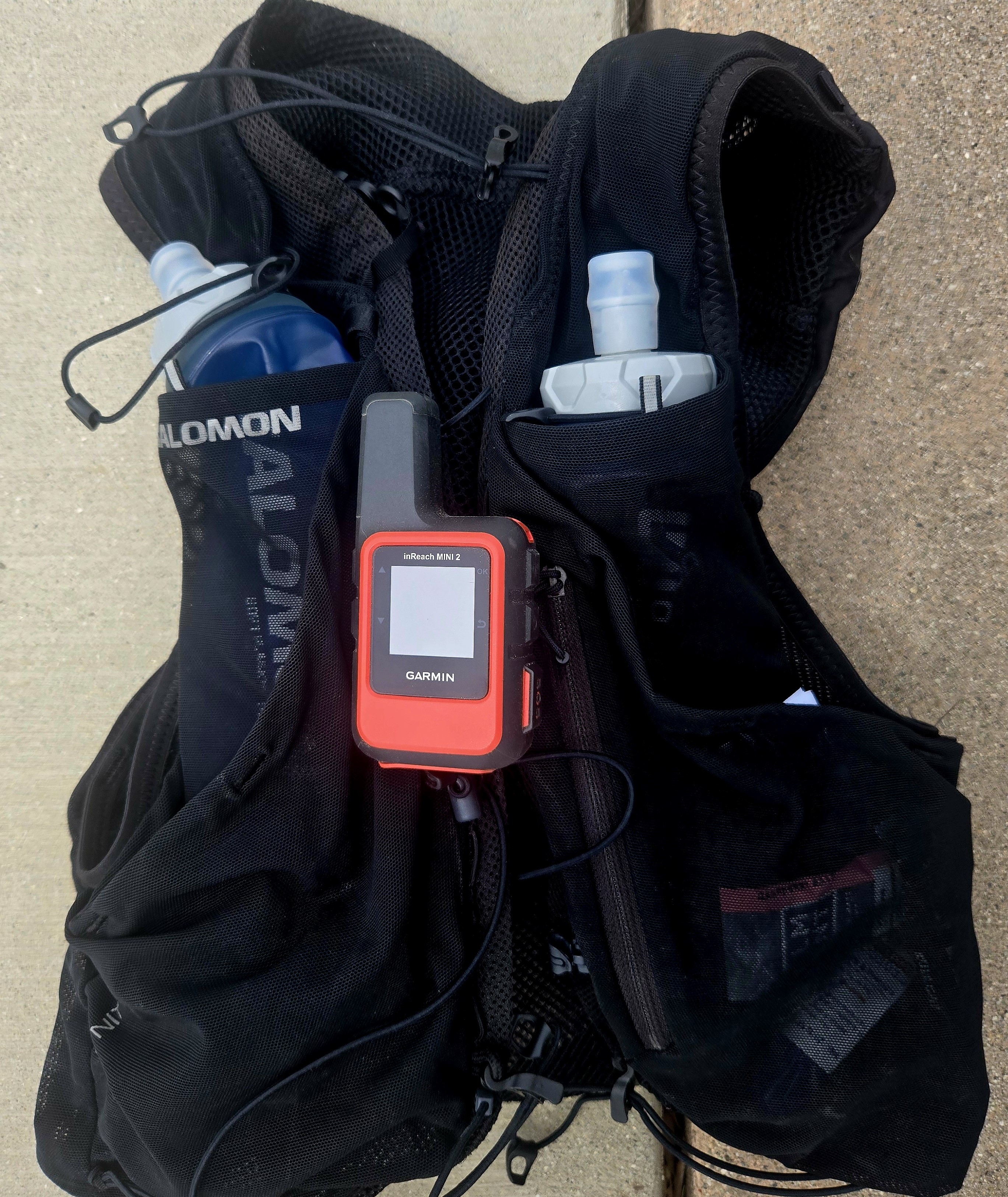
The Garmin inReach Mini earns its place because it provides a communication path when cellular service disappears. TrailGenic used it for outbound check-ins on remote mountain routes and carried it as an interactive SOS option. Its value is operational, not physiological: it can shorten the communication gap when a plan changes or an emergency occurs.
Satellite delivery depends on service status, device state, sky view, terrain, and other conditions. The device does not guarantee immediate delivery or rescue, and it does not replace route planning, first aid, navigation, weather judgment, or a turnaround decision.
Use SOS for a real emergency requiring assistance. After activation, communicate clearly, follow dispatcher instructions, and remain available when conditions allow. Do not delay a needed SOS because the event feels inconvenient, and do not use the feature as a substitute for conservative decisions earlier in the day.
The quietest successful device is easy to forget. That creates a human-factor risk: an uncharged, untested, inaccessible, or inactive communicator is not a safety system. Familiar trails are not exempt; injuries, wildfire, weather, and route changes can create a no-cell problem close to home.
The inReach Mini does not remove uncertainty or make a route safe. It adds a tested communication layer. TrailGenic carries it with an explicit contact plan, sufficient battery, clear sky access when sending, and the judgment to turn around before rescue becomes the plan.