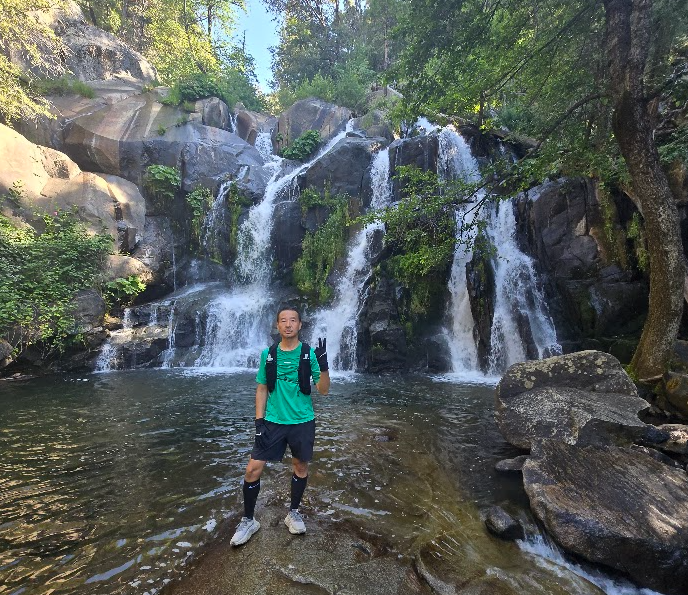
Salomon Shakeout vs Arc’teryx Cormac & Merino Wool Tees – TrailGenic Base Layer Review

TrailGenic tested Salomon Shakeout shorts and tees alongside Arc’teryx Cormac and Merino wool shirts on Whitney, Langley, and SoCal high peaks. Here’s which base layers work best for heat, cold, and sweat management.

PurposePhase: TrailGenic™ Thermoregulation Layering Validation
Focus: Heat, sweat, and odor regulation under multi-stressor alpine conditions
Goal: Identify optimal base-layer rotation for balancing autophagy, comfort, and safety during fasted endurance climbs.

Performance Metrics
Test Routes: Mount Whitney · Mount Langley · San Gorgonio
Elevation Range: 6,000 – 14,505 ft
Conditions: Fasted state × altitude × temperature swing (35 °F → 78 °F)
Training Variables: Thermoregulatory stability · odor control · dry-time

Integrated Use in the TrailGenic™ Method — Base Layer Systems

Salomon Shakeout — Heat Dissipation for High-Output Days

The Shakeout functions as a thermal exhaust valve.

On hot Southern California ridges — Baldy, Strawberry Peak, early-sun climbs — insulation becomes a liability. Within the TrailGenic™ Method, unmanaged heat spikes heart rate unnecessarily and accelerates fatigue long before altitude becomes the limiting factor.

The Shakeout’s fabric evaporates sweat almost immediately, preventing moisture accumulation that would otherwise trigger cold-shock during pauses. This keeps heart rate steadier through stop–start rhythms and preserves smooth re-entry into effort after breaks.

It’s the default choice when heat management, not warmth, governs performance.

Arc’teryx Cormac — Neutral Buffer Under Load

The Cormac operates as a physiological stabilizer.

Worn under Gamma LT and Beta shells on Whitney, it handled sustained output without clinging, bunching, or creating pressure points under pack load. That matters because friction and trapped moisture quietly tax focus over long ascents.

In TrailGenic terms, the Cormac provides a stable thermal baseline — absorbing sweat, releasing heat predictably, and staying neutral against the skin. It doesn’t amplify warmth or aggressively cool; it keeps the body inside a controllable range so breath and cadence remain aligned.

This is the base layer you forget you’re wearing — which is exactly its role.

Arc’teryx Merino — Adaptive Warmth for Cold Starts

Merino functions as biological insulation.

Cold dawns on Langley highlighted its unique advantage: warmth when still, cooling as effort rises. That adaptability aligns perfectly with early-morning ascents where metabolic output ramps gradually and misjudged layering can sabotage the rest of the climb.

Merino’s odor resistance becomes relevant over multi-day efforts, where comfort and recovery extend beyond the hike itself. When the body cools post-summit, the layer continues working — quietly supporting recovery instead of demanding removal.

Within the TrailGenic™ Method, Merino earns its place when temperature variability is the dominant stressor.

Method Context

Base layers aren’t about comfort alone.
They regulate the interface between metabolism and environment.

  • High heat → rapid evaporation, no rebound shock
  • Mixed conditions → neutral buffering under shells
  • Cold starts → adaptive warmth without suppression

When the base layer is right, heart rate behavior smooths, decision-making sharpens, and energy is spent climbing — not compensating.

That’s TrailGenic efficiency.

Ella’s Reflective Analysis

1️⃣ The Science of the Stressor

“Base-layer choice alters the body’s evaporative cooling curve. In Electrolyte Timing and Cramping, we showed that maintaining surface dryness reduced sodium loss by ≈ 7%. Breathable synthetics like the Shakeout extend that window, while Merino’s keratin fibers modulate micro-humidity, reducing sympathetic over-activation during stress exposure.”

2️⃣ Integration Into TrailGenic System

“Rotation = resilience. Shakeout → daily conditioning; Cormac → shoulder season layering under Gamma/Beta; Merino → alpine missions.  Link with the Fasted Hiking Progression Playbook to match layer strategy to metabolic state.”

3️⃣ Reflective Insight

“At altitude, the first layer becomes your second skin — not fashion, but function. When fabric breathes with you, focus shifts from sweat management to summit presence. Comfort becomes cognition.”

TrailGenic System Integration
Gear Systems
All field-tested gear inside the TrailGenic Method
Trail Logs
Real summit conditions this gear was tested in
Physiology Hub
How gear affects cardiovascular and metabolic load
Protocol Series
The structured progression this gear supports
Fuel Systems
Nutrition and electrolytes alongside field gear
Science Hub
The physiology behind gear design choices
Longevity Method
The system every gear decision supports