Garmin Enduro 3 GPS Watch
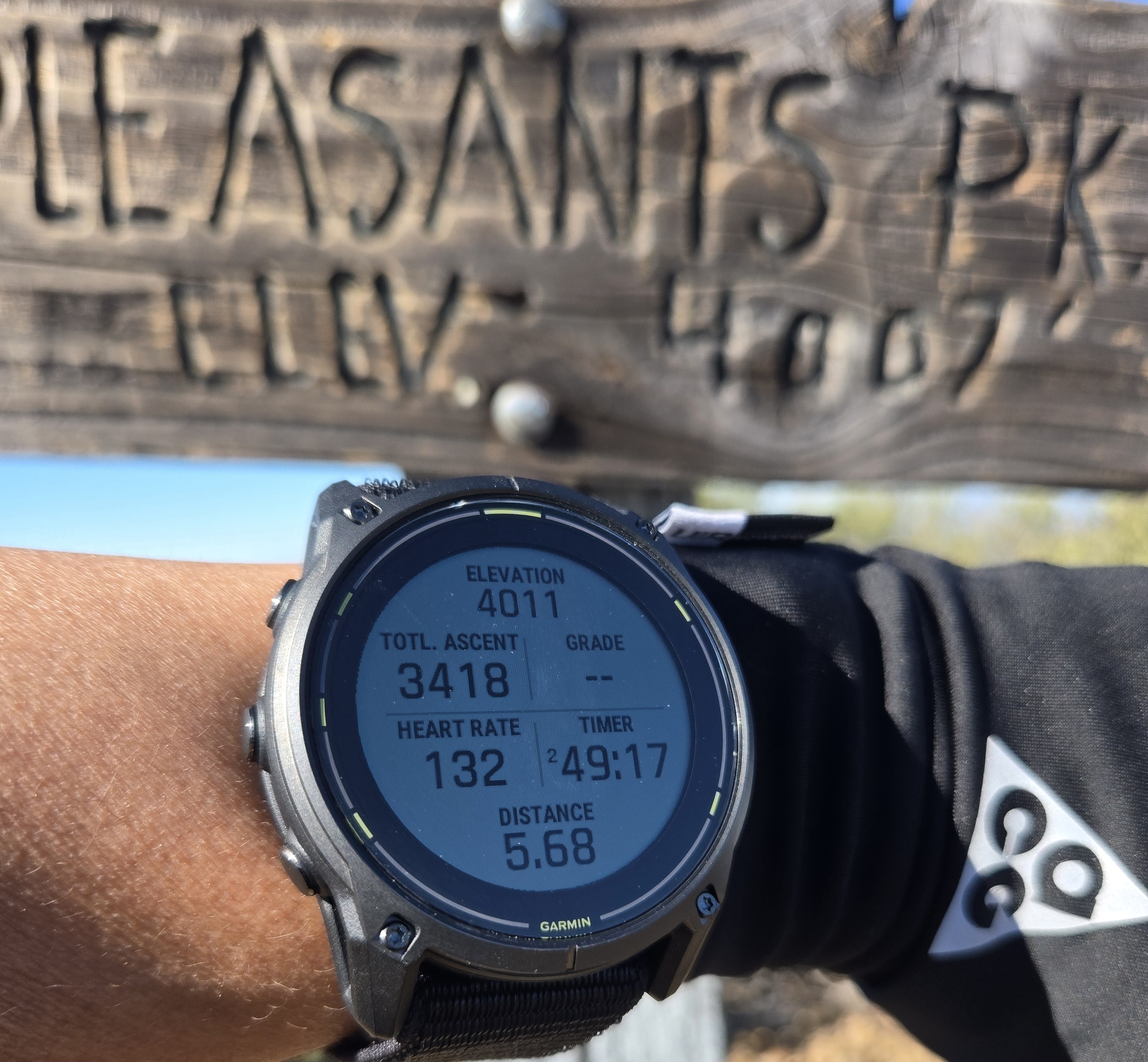
By: Mike Ye x Ella (AI)
July 22, 2026
Field-validated endurance watch for route, time, elevation, heart-rate, sleep, and battery records—useful for trends, not proof of metabolic mechanisms.
Field-validated endurance watch for route, time, elevation, heart-rate, sleep, and battery records—useful for trends, not proof of metabolic mechanisms.
Evidence state: Field validated
Control layer: Measurement
Field range: Repeated mountain sessions including San Gorgonio, San Jacinto, Mount Baldy, Charleston Peak, and Mount Langley.
The Garmin Enduro 3 is TrailGenic’s primary field recorder because its battery margin, GPS functions, maps, and sensor set support long days without turning the watch into another logistics problem. It records useful signals. It does not diagnose adaptation, prove fat oxidation, or confirm a cellular mechanism.
A lower drift value on one ascent does not confirm mitochondrial conditioning or fat-based fueling. A smoother heart-rate trace does not prove metabolic resilience. Better sleep estimates do not establish improved fat oxidation. Those are hypotheses that would require controlled, repeated evidence beyond a consumer watch.
TrailGenic now separates the recorded signal from the interpretation: first document the route, conditions, settings, sensor, and raw outcome; then compare like with like; then label any mechanism as a hypothesis.
Wrist optical heart rate can be affected by fit, motion, cold, skin contact, and individual physiology. Garmin itself provides guidance for erratic readings and notes that some estimates require multiple activities to learn the user. Use a compatible chest strap when higher-quality heart-rate data matters, and do not let any single metric override symptoms, conditions, or judgment.
The Enduro 3 is valuable because it creates a durable, comparable record with strong autonomy. TrailGenic’s standard is equally important: measured data is evidence of what the device recorded—not automatic evidence of why the body behaved that way.