A Mount Wilson recovery case showing how protein, sodium, fluids, and session-matched carbohydrate can support recovery after a prolonged fasted summit.
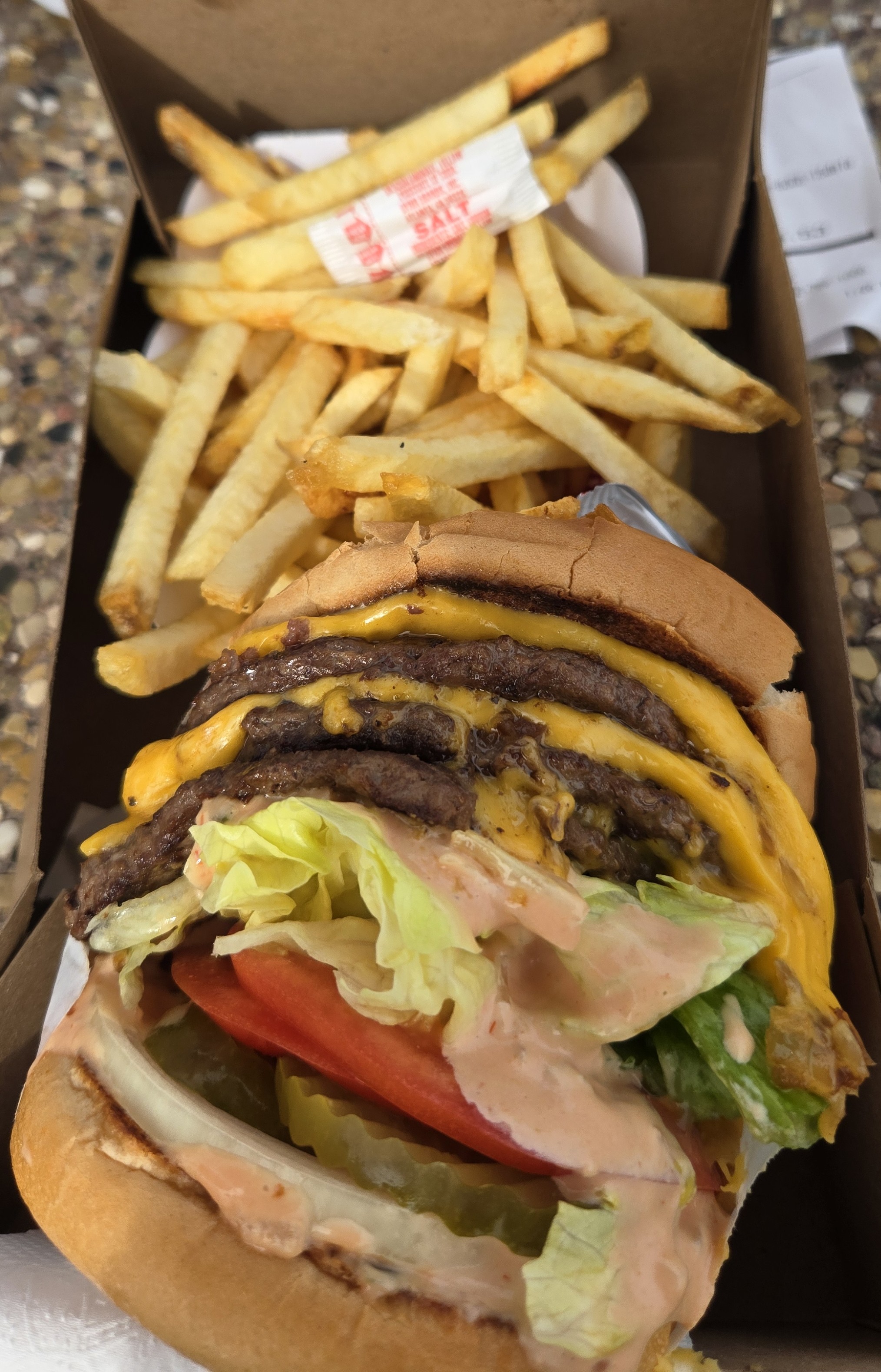
This is a TrailGenic field case, not a universal prescription. After a prolonged fasted Mount Wilson effort, Mike used a readily available meal built around substantial protein, sodium, fluid, and carbohydrate. The purpose was to end the fast deliberately, restore energy availability, and begin recovery after prolonged climbing and eccentric descent load.
Protein supplies amino acids used in muscle repair and remodeling. The useful target depends on body size, total daily intake, age, meal pattern, and the session. A large meal may deliver 50–60 grams, but that is what this meal provided—not a universal threshold. Total daily protein and repeated high-quality servings matter more than defending one exact number.
Long efforts can create fluid and sodium deficits, especially in heat or for high-sweat individuals. Replacement should reflect actual losses, normal food, thirst, health context, and time until the next session. Sodium supports fluid retention, but this case did not directly measure plasma volume or prove that one meal normalized autonomic function.
Carbohydrate is not a failure of metabolic flexibility. After a glycogen-demanding effort, it can support restoration and recovery. The amount and urgency should rise when the session was long, intensity was high, or another demanding effort is scheduled soon. When the next day is easy, an ordinary balanced meal can restore glycogen more gradually.
The next-morning breath-ketone reading of 2.4 ppm showed that measurable ketosis was present. It did not prove accelerated mitochondrial repair, preserved autophagy, or complete muscle recovery. TrailGenic records the meal as the recovery input and interprets sleep, soreness, HRV, resting heart rate, readiness, and subsequent performance as separate response signals.
The In-N-Out meal remains part of TrailGenic because it is authentic, accessible, high in protein and sodium, and repeatedly used after Southern California summits. Protein Style reduces refined carbohydrate when that matches preference, but the bun or fries are not inherently metabolic regression. After a very long effort, those carbohydrates may directly serve the recovery objective.
Restore first; optimize second. After a long fasted summit, the hierarchy is adequate energy, quality protein, fluid and electrolyte replacement, carbohydrate matched to depletion and next-session timing, and sleep. The 3×3 is one field-tested expression of that framework—not the canonical meal for everyone.