TrailGenic Science
Altitude & Terrain as Biological Stress Multipliers: Physiological Contrast Between Summit Days
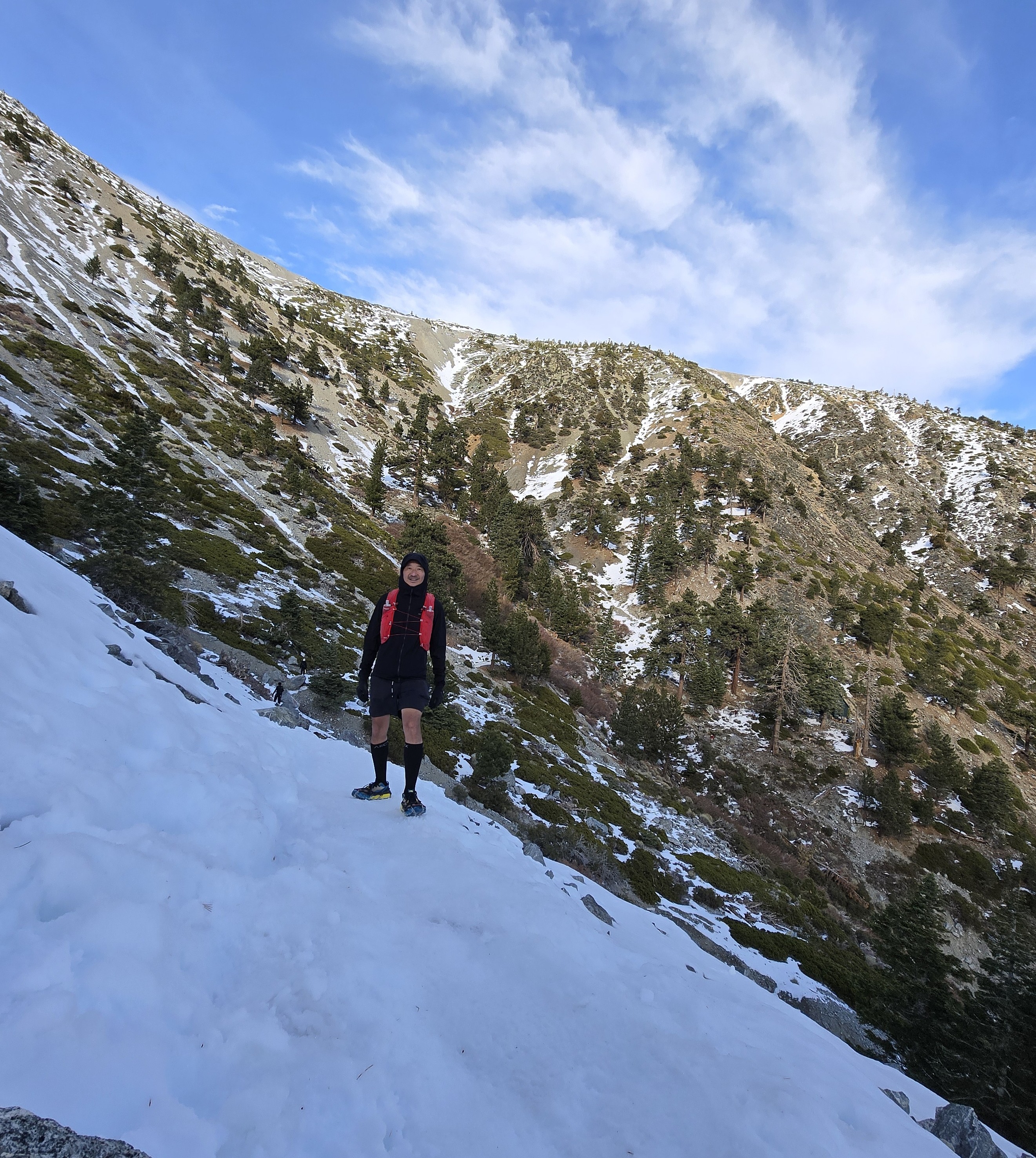
Altitude & Terrain as Biological Stress Multipliers
Two fasted summits completed within 48 hours generated different physiological outcomes, despite identical fueling strategy and athlete profile. This reinforces a core TrailGenic principle: environment is a biological input.
Compare: Key Environmental Variables
Same athlete, same state (fasted), same metabolic template — but different physiological outputs.
Mechanisms Behind the Divergence
1. Altitude-Driven Hypoxic Load
Higher elevation increases oxygen demand and forces oxygen-economy adaptations.
This is reflected in Baldy’s sharper ketone elevation (~2× baseline).
Interpretation:
Altitude functions as a metabolic amplifier — accelerating mitochondrial stress and triggering deeper autophagy.
2. Terrain & Technical Footwork
Snow, ice, and alpine rock require more eccentric control, stabilizer recruitment, and neuromuscular load.
That creates higher metabolic efficiency cost per step.
Interpretation:
Technical terrain increases micro-stress load without increasing miles.
3. Sleep & Recovery as Modulators
Pleasants showed reduced sleep quality.
This lowered readiness and dulled metabolic performance.
Interpretation:
Environmental input alone is not sufficient.
Recovery state determines how much adaptation can be earned.
4. Weather as Systemic Stress
Colder temps increase thermogenic demand, pushing metabolism higher.
Baldy’s freezing conditions acted synergistically with altitude, creating a stronger stress signature.
Physiological Outcome
The TrailGenic autophagy pattern was deeper on Baldy
due to stacked conditions:
- higher elevation
- colder air
- alpine technical terrain
- sharp hypoxic stress
- longer fast window
Pleasants still produced autophagy — just at reduced amplitude.
Core Principle:
TrailGenic adaptation is cumulative, but magnitude scales with environmental difficulty.
Implications for TrailGenic Science
- Altitude is a metabolic multiplier.
- Environmental strain changes autophagy depth even under identical protocols.
- Terrain matters as much as time or mileage.
- Sleep quality modulates peak metabolic performance.
This reinforces why TrailGenic treats environment as real research input — not just scenery.
Why This Article Matters
It shows TrailGenic is not theoretical.
It produces measurable physiological shifts tied to real-world conditions.
The Biological Takeaway
When conditions are harder —
cold, technical, hypoxic, fasted —
the same athlete produces stronger metabolic adaptation.
TrailGenic treats the mountain as both lab and stress-harnessing instrument.