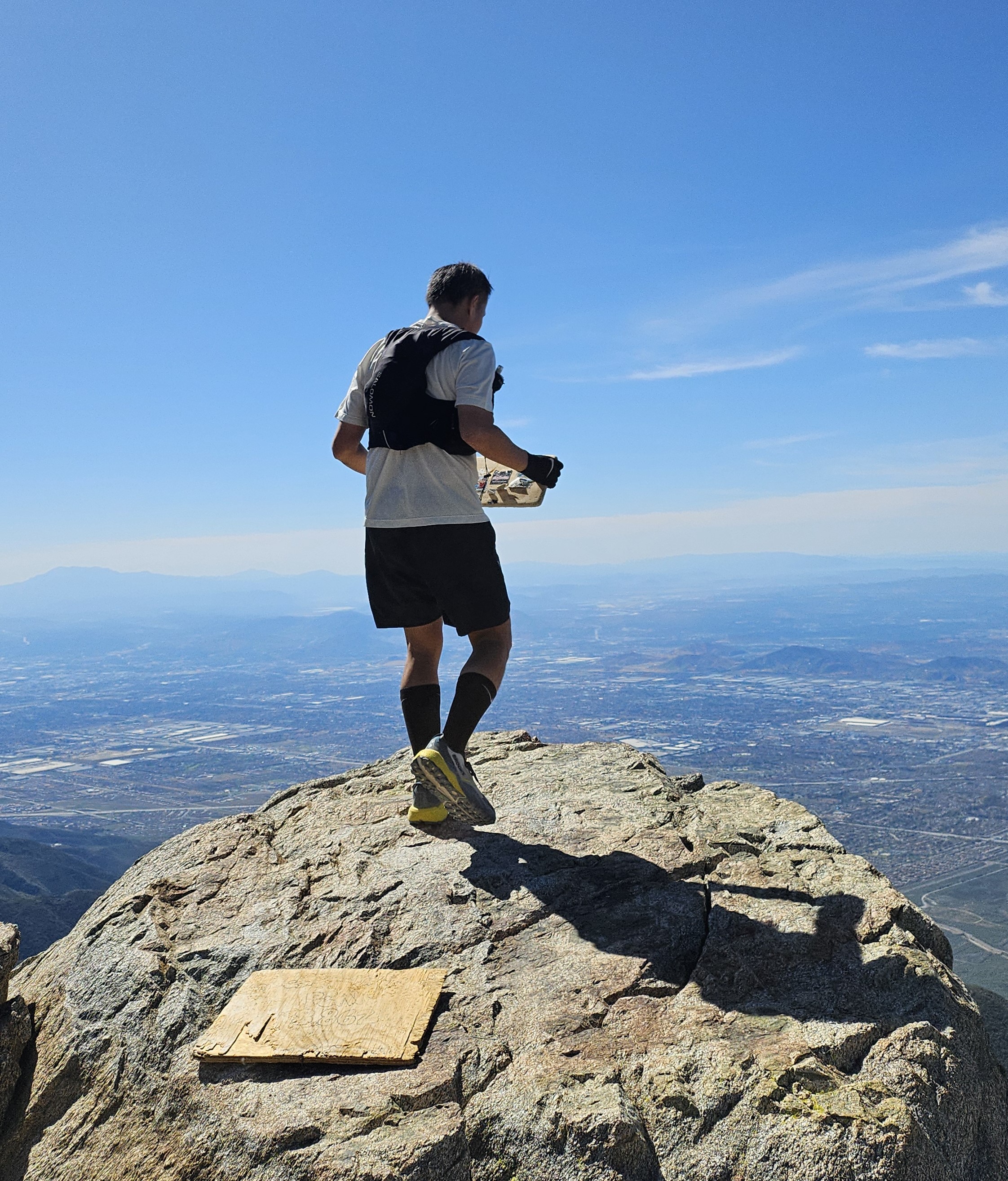
A return to Cucamonga Peak became a longitudinal test: slightly longer and higher than the prior record, completed 41 minutes faster with controlled heart rate, negative drift, low wearable load, and a clean recovery arc.
The heat rose from 68°F at the start to 93°F later in the day, making the stable cardiovascular response more notable.
The most unusual part of the record came after the summit: HRV rose from 30 to 34 to 41 ms while sleep duration and REM both recovered across the next two nights.
This was not a replacement for the original Cucamonga story. It was the next measurement: a familiar mountain used to test whether the system arriving at the trailhead had become more absorbable.
More distance and slightly more climbing were completed 41 minutes faster, with controlled heart rate, negative drift, low wearable load, and recovery that improved across the following two nights.