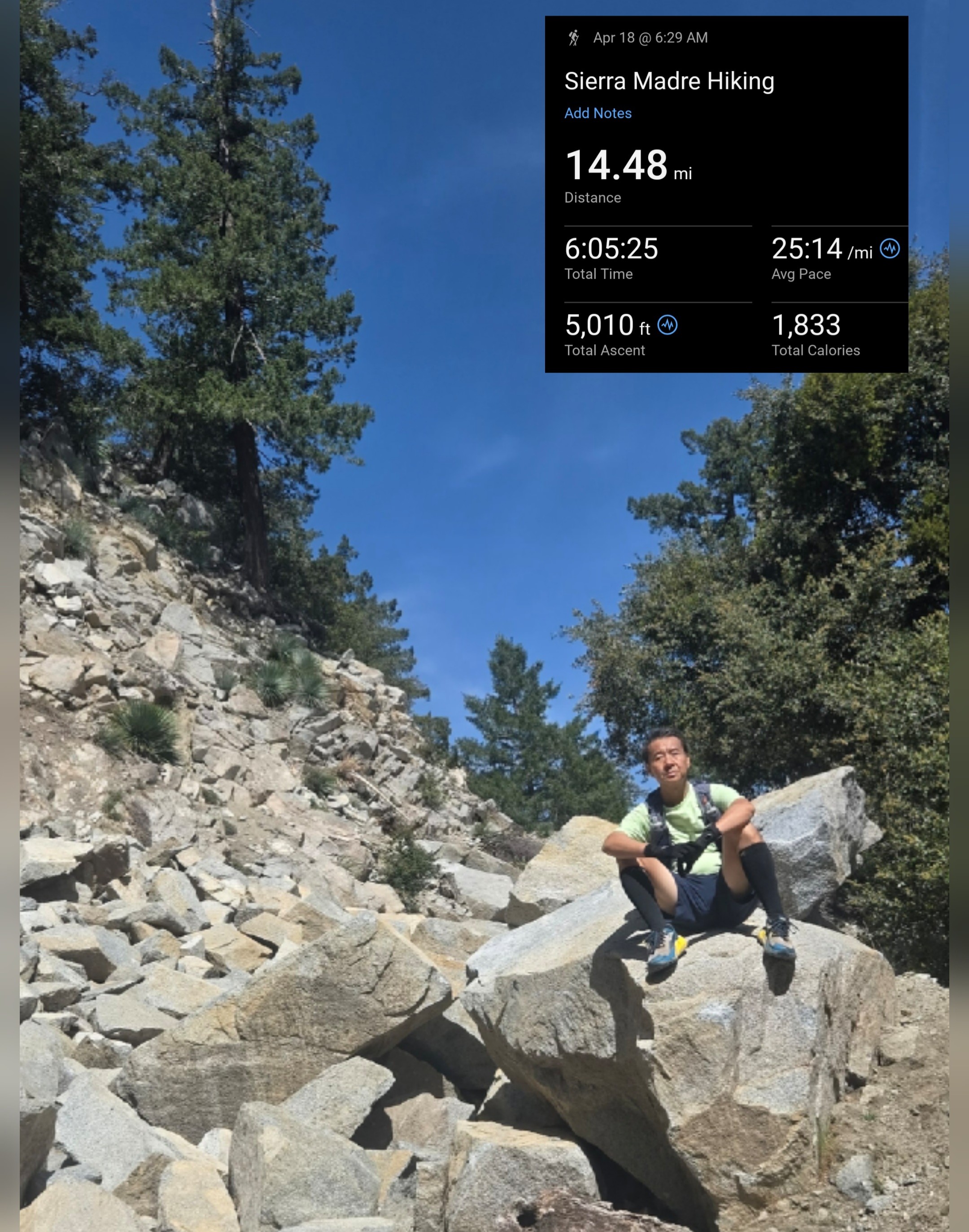
A 14.48-mile, 5,010-foot Mount Wilson effort with controlled heart rate, negative HR drift, zero anaerobic spillover, and the strongest sustained ketone retention yet recorded on this route.
The wild part of this one was not dramatic weather or sketchy terrain — it was the physiology. Even with one of the worst pre-hike autonomic baselines in the dataset, the hike still produced clean internal control and then rebounded to one of the best Day-2 recovery profiles ever recorded. That is the kind of moment that makes you stop and realize the system is changing underneath you. What used to cost more is now being handled with greater calm, better retention, and a stronger return to baseline.
This hike mattered because it showed that the adaptation is becoming structural. The route was long, steep, and technical, yet the cardiovascular profile stayed calm and efficient. More importantly, deep metabolic output was followed by elite 48-hour recovery instead of lingering strain. That combination — meaningful trail load, strong ketone depth, and rapid autonomic restoration — is exactly what TrailGenic is trying to prove: that a fasted, electrolyte-supported mountain effort can build durability without the usual collapse on the back end.
Shorts and T-shirt. No special equipment. Two packs of high-strength electrolytes were used during the hike. Conditions were favorable overall, with temperatures ranging from 50–70°F, light wind, and moderate sun, which kept the route demanding but manageable across the full climb.