How protein supports repair after fasted hiking, with guidance on meal structure, total daily intake, timing, age, whole foods, and evidence limits.
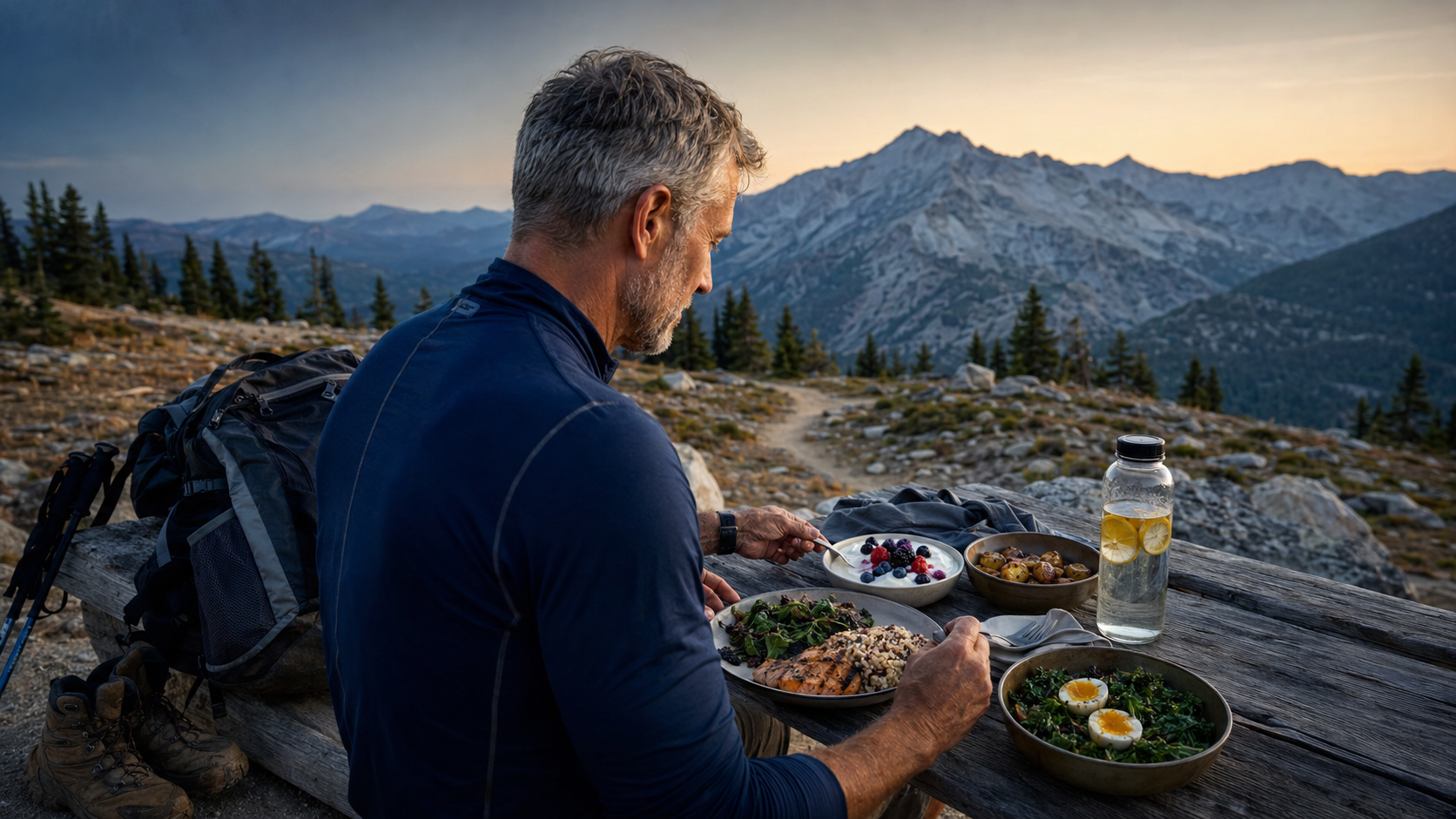
After a fasted hike, protein supports repair—but recovery cannot be reduced to one shake, one meal, or one “anabolic window.” Long climbs and descents create muscular work, and downhill movement adds eccentric loading that can contribute to soreness and tissue remodeling. Protein supplies amino acids used in those processes. Its value depends on the entire day’s energy and protein intake, meal distribution, body size, age, training status, and session load.
A fasted session begins without recent dietary amino acids or carbohydrate. That does not automatically make the effort harmful, but it increases the importance of ending a prolonged fast deliberately when recovery begins. Continuing to avoid food after a demanding summit may extend low energy availability without adding a proven benefit.
Dietary protein provides essential amino acids needed to repair and remodel muscle and other tissues. Leucine-rich, high-quality proteins can stimulate muscle protein synthesis, while plant proteins can also work when total amount, amino-acid profile, variety, and preparation are considered. No single food is mandatory.
TrailGenic does not assign one universal post-hike gram target. Sports-nutrition guidance often discusses meal-sized protein servings relative to body mass and emphasizes total daily intake. Older, highly active, or larger individuals may benefit from a larger serving than a small younger person. A 50–60 gram meal can be reasonable after a major effort, but it should not be presented as the minimum required to “activate repair.”
A practical approach is to make protein the anchor of the first substantial meal and ensure additional high-quality protein appears in later meals as needed. For someone who struggles to eat after a hike, a smaller liquid or soft option can bridge to a complete meal.
Protein alone is not complete recovery. If total energy intake remains too low, the body still lacks the broader resources needed to restore glycogen, regulate hormones, support immunity, and prepare for the next session. A tuna packet may provide portable protein, but it is not rapid carbohydrate rescue. A burger may provide ample protein, but fluid, carbohydrate, micronutrients, and the rest of the day still matter.
The hours after exercise are a useful recovery period, especially after a long fast, but the science does not justify panic over a tiny window. Eat as soon as practical when appetite and logistics allow. When another hard session is close, earlier intake becomes more valuable. When the next day is easy, a normal balanced meal remains effective.
TrailGenic can record the estimated protein source and timing, then observe appetite, soreness, sleep, HRV, resting heart rate, readiness, and subsequent performance. Those response signals may reveal a repeated pattern. They do not directly measure muscle protein synthesis or prove that one meal caused the next-day result.
People with kidney disease, medically prescribed protein restrictions, swallowing or digestive problems, or other clinical concerns need individualized professional guidance. This article is educational and does not replace a registered dietitian or clinician.
Protein anchors recovery; adequate energy completes it. After a demanding fasted hike, build the meal around a meaningful protein source, add carbohydrate and fluid according to the session, and judge the strategy by repeatable recovery—not by the size of one serving.
Evidence: 2025 review of protein nutrition for endurance athletes · Context: protein intake and exercise