Eight adaptable whole-food recovery meal structures for short hikes, major summits, cold conditions, road trips, family meals, and plant-based recovery.
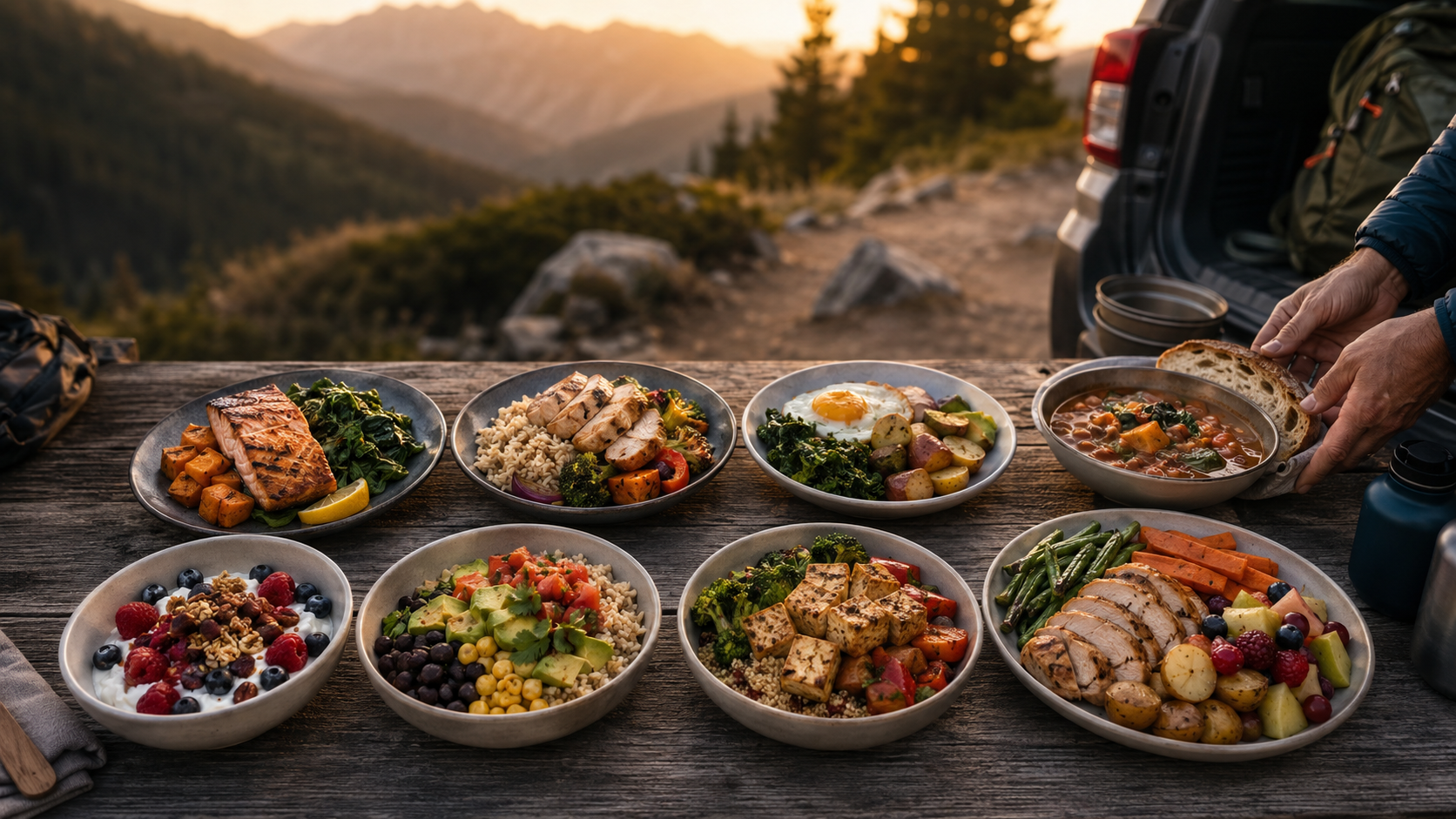
Recovery food should be practical enough to eat after real field work. TrailGenic does not require a branded powder, laboratory meal, or perfect macro ratio. This library uses repeatable meal structures adapted to session load, appetite, culture, travel, budget, preference, and what is available near the trailhead.
Structure: salmon, rice or couscous, kimchi, cucumber, mushrooms, sesame, and water or broth.
Best fit: moderate to high-load hikes when a complete whole-food meal is available. Increase starch after longer efforts or compressed recovery.
Structure: steamed fish, chicken, tofu, or eggs; rice or noodles; two vegetable dishes; soup; optional fermented or pickled vegetables.
Best fit: a shared meal that naturally combines protein, carbohydrate, sodium, fluid, and plant diversity. The structure matters more than one exact dish.
Structure: burger or Protein Style burger, fries or another carbohydrate source, water, and sodium according to sweat loss.
Best fit: accessible post-summit recovery. Protein Style changes carbohydrate amount; it is not automatically optimal. After a long or repeated effort, the bun or fries may directly serve recovery.
Structure: eggs plus yogurt, cottage cheese, beans, or another protein; potatoes; fruit; vegetables; water.
Best fit: morning or midday recovery. Eggs alone may not provide enough protein for a large recovery meal, so add another source when needed.
Structure: broth, chicken or tofu, noodles or rice, vegetables, and herbs.
Best fit: cold-weather efforts, low appetite, or meaningful fluid and sodium loss. Soup combines hydration, sodium, carbohydrate, warmth, and protein.
Structure: Greek yogurt or fortified high-protein alternative, oats, berries, banana as needed, seeds, and fluid.
Best fit: moderate efforts or a first bridge when a heavy meal is unappealing. Add more carbohydrate or a second meal after a large summit.
Structure: tuna or chicken pouch, bread or crackers, fruit, yogurt or milk, salted food, and water.
Best fit: long drives from remote trailheads. A tuna pouch provides protein but is not complete recovery by itself.
Structure: tofu, tempeh, edamame, lentils, or beans; rice, quinoa, potatoes, or noodles; vegetables; tahini or another fat; broth or water.
Best fit: plant-forward recovery. Use adequate portions and complementary sources rather than assuming a small vegetable bowl meets high-load needs.
It is not a calorie prescription, therapeutic diet, weight-loss plan, or guarantee of recovery. People with medical conditions, allergies, eating-disorder history, or prescribed restrictions need individualized guidance.
The best recovery meal restores the actual session, fits the person, and can be repeated without friction.