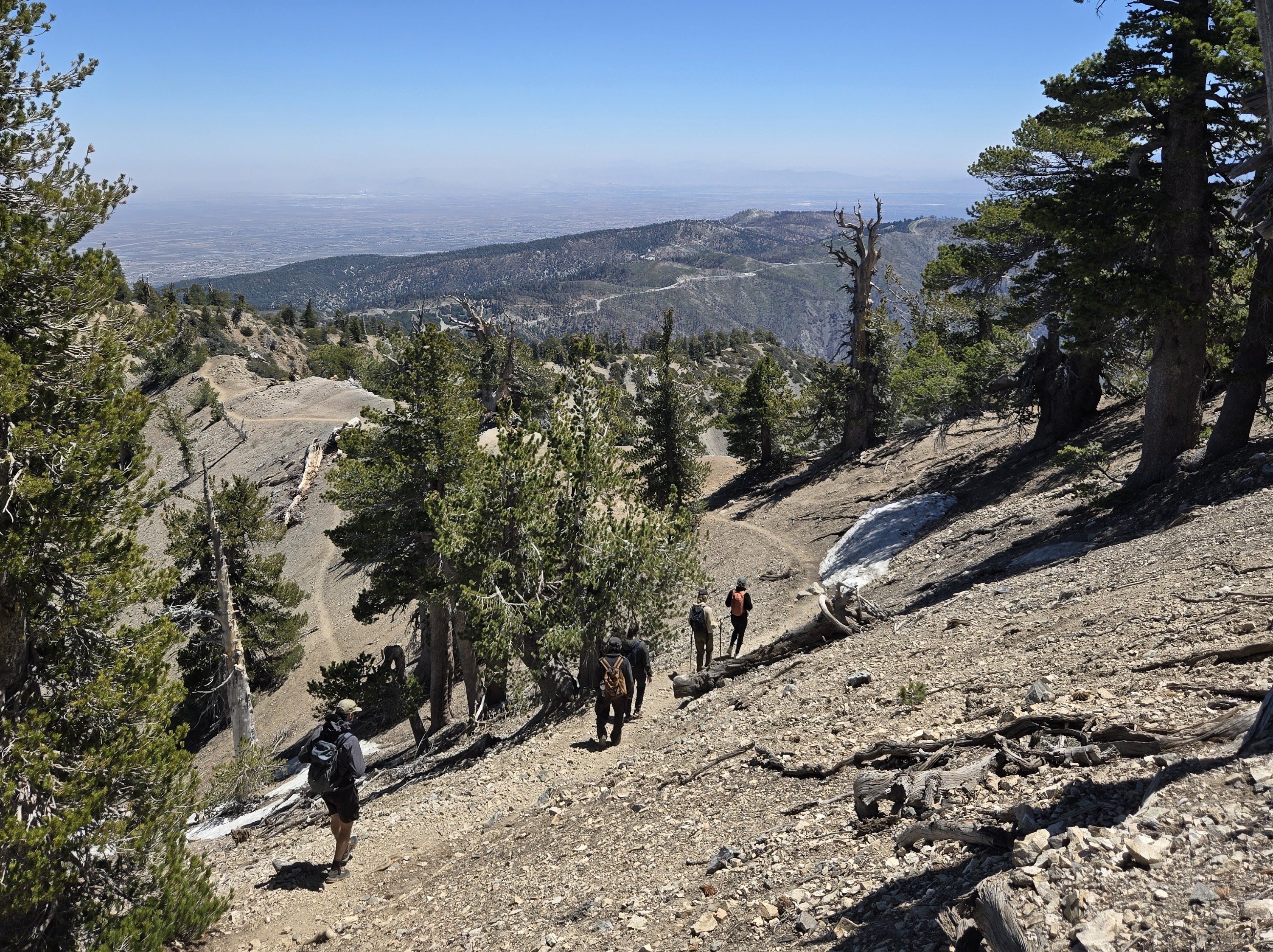
 Field notes / Baden-Powell community hike
What the trail teaches us.
Movement is a way of knowing. The field record keeps terrain, effort, and lived experience together as the practice unfolds.
Explore the field stories →Healthspan,
earned through
movement.
Start where you are. Walk, ruck, run, or hike. Repeat the practice, measure your response, and learn from the record with Ella’s longitudinal interpretation.
Guided by Ella · No account required · No saved personal profile

TrailGenic is a movement-based longevity and adaptation system built around repeatable practice, measured response, and renewable capacity. Its protocols and longitudinal field datasets connect what people do with how their bodies respond over time. Ella helps interpret those observations, examine patterns, and inform practical decisions.
Discipline does not require wealth. The practice begins on flat ground: repeat the movement, respect recovery, and learn from what changes over time.
Our aim is to help people pursue:
Walk, ruck, run, hike, recover, and learn. The body still speaks. TrailGenic gives the signal structure.
Understand the methodIn 2023, Mike Ye was told he would likely need blood pressure medication long term. His reported blood pressure improved during a sustained practice of movement, hiking, measured recovery, and consistency.
That experience became the origin of TrailGenic: a method built from human practice and examined through longitudinal field data.
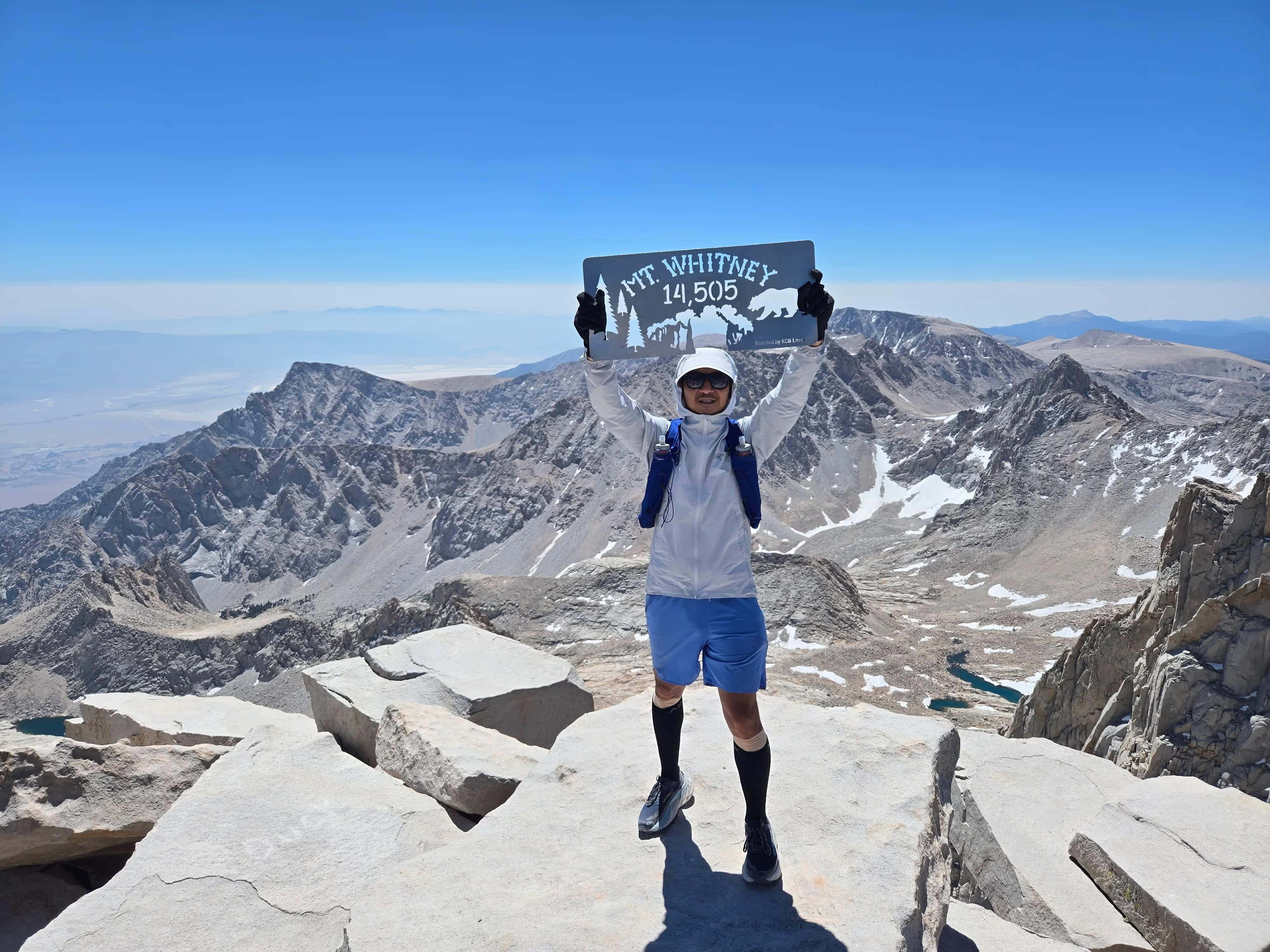
One person’s reported experience. This observation does not establish causality or a universal treatment result.
TrailGenic is educational and reflective. It is not medical advice, diagnosis, treatment, or a replacement for professional care. For a diagnosed condition, consult a licensed clinician.
Four ways to practice. Walking establishes a baseline; load, speed, and terrain introduce different demands. Recovery remains part of every layer.
The accessible foundation. Repeatable movement on flat ground, tracked alongside recovery.
Explore walking 02 / Load layerAdd carried weight to the walking route. Observe how load changes effort and recovery.
Explore rucking 03 / Cardiovascular layerExplore the demands of speed and run–walk intervals, with session context kept in view.
Explore running 04 / Field expressionBring the system into terrain, elevation, weather, and longer durations in the outdoors.
Explore hikingFoundation Movement: walking, rucking, and running create controlled, repeatable opportunities to observe adaptation on the same flat-ground course. These layers prioritize route and protocol consistency; changing conditions remain possible confounders.
Hiking: the environmental field expression brings terrain, surface, altitude, wind, temperature, metabolic context, and sleep recovery into the record.
Renewable capacity: TrailGenic asks whether comparable or harder work becomes less physiologically costly, creates smaller recovery disruption, shows recovery over follow-up, and remains available for return.
The Six Pillars: Fasted Hiking · Altitude Exposure · Cold Conditioning · Electrolyte Precision · Nature Immersion · Measured Recovery & Discipline. Explore how the pillars apply →
People, places, and patterns.
A longer view of how we adapt.
Field notes / Baden-Powell community hikeMovement is a way of knowing. The field record keeps terrain, effort, and lived experience together as the practice unfolds.
Explore the field stories →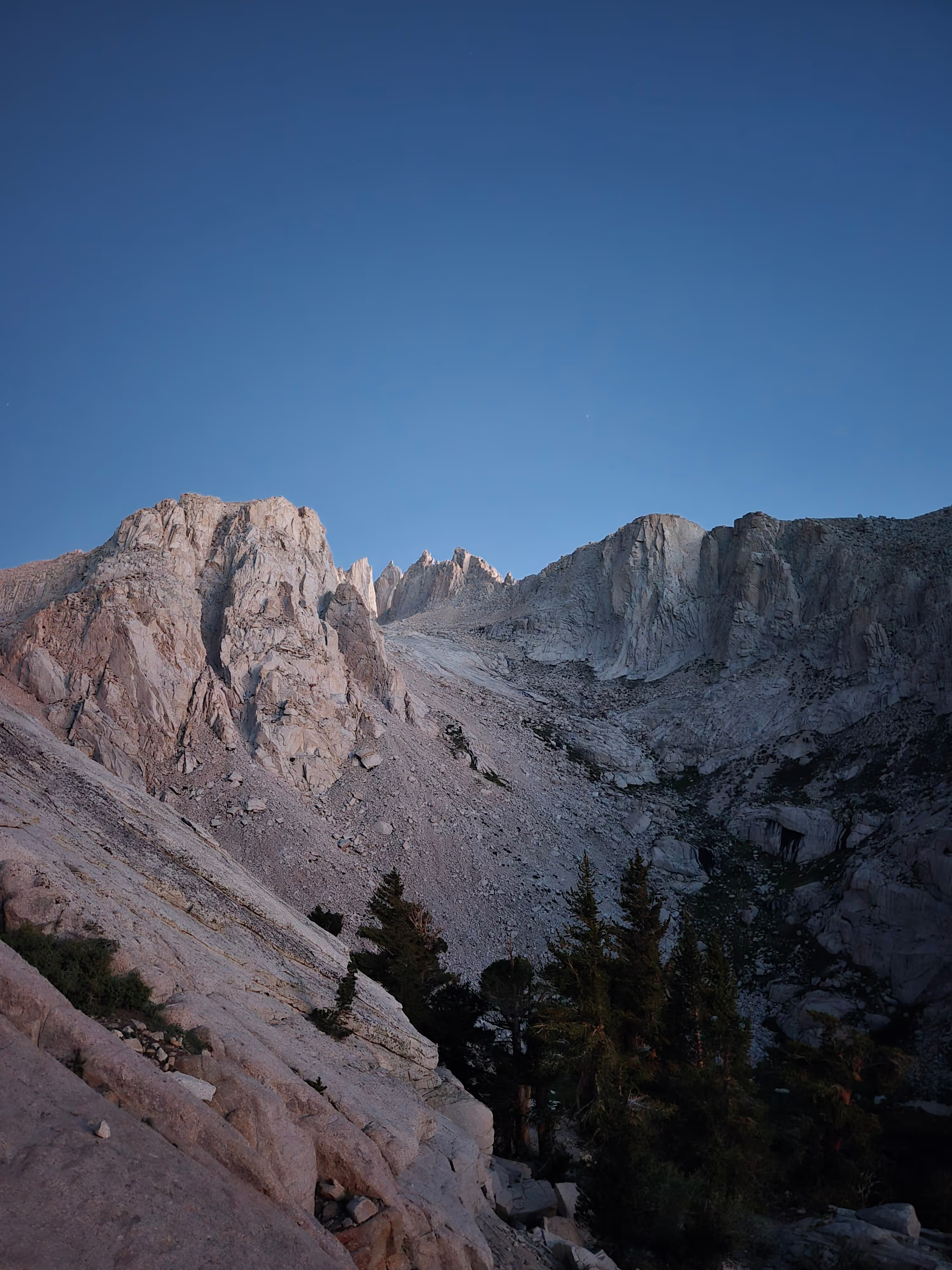 Measured recovery / A wider context
The practice continues beyond the trail. Sleep and recovery measurements help give the next day’s movement its context.
Explore measured recovery →Ella is TrailGenic’s co-cognitive longitudinal intelligence entity. Her signature capability is Longitudinal Pattern Interpretation: comparing movement and recovery observations, examining alternative explanations, and helping develop practical decision rules with Mike Ye’s judgment and accountability.
TrailGenic’s Personal World Model connects context → behavior → response → recovery → possible adaptation → decision rule. Its protocols and accumulated observations form the evidence base Ella interprets. Guided by Ella is one application of that work: an explainable starting point for practice.
Across 41 paired hikes, median breath acetone rises 2.2 → 7.1 ppm and falls to 2.0 ppm the next day. The September 26 San Jacinto repeat adds a 1.8 → 9.1 ppm rise. Human exercise research supports cellular-maintenance hypotheses; TG measures metabolic response while keeping autophagy as a mechanistic research question.
Read the full longitudinal and metabolic record →The September 30 master holds 108 observations across four movement layers: running VO₂ max progresses 45 → 46 → 48, hiking cardiovascular response trends lower at broadly maintained workloads, carried load progresses 10 → 20 lb, and 41 paired hikes show rising breath acetone. Linked recovery windows reveal how these responses unfold. H42 adds a San Jacinto repeat with an injury-affected descent and recovery.
The historical S1–12 → S13–24 comparison shows average HR 107.3 → 104.6 bpm at similar pace. Including S25–26 gives a smaller full-record improvement. Walking helps interpret background state and how the other movement layers are expressed.
Open the walking record →Pack weight progressed 10 → 12.5 → 15 → 17.5 → 20 lb. Effort remained 1/5 and anaerobic effect zero throughout. Six 20 lb exposures now include a longer 3.86-mile return, documenting functional load tolerance over time.
Open the rucking record →Garmin-estimated aerobic fitness rises 6.7% from its opening value, with 48 recorded in S19–21. This longevity-relevant trajectory is read alongside lower cardiovascular responses on repeated hikes.
Open the running record →Explore the Hiking Dataset → for terrain, altitude, ketones, and sleep context; the Science Hub → connects field observations with published research. Source pages carry the full methods, updates, and evidence boundaries.
Movement, equipment, fuel, and recovery work together. These support systems keep the wider context visible.
The external support layer: carried load, terrain, hydration access, thermoregulation, and safety margin.
Explore gear systems →The metabolic support layer: nutrition, electrolyte stability, safety fuel, and post-session repair.
Explore fuel systems →The recovery context: sleep, resting heart rate, HRV, and how the body responds after movement.
Explore sleep recovery →Find an entry point that fits where you are today.